Main rows
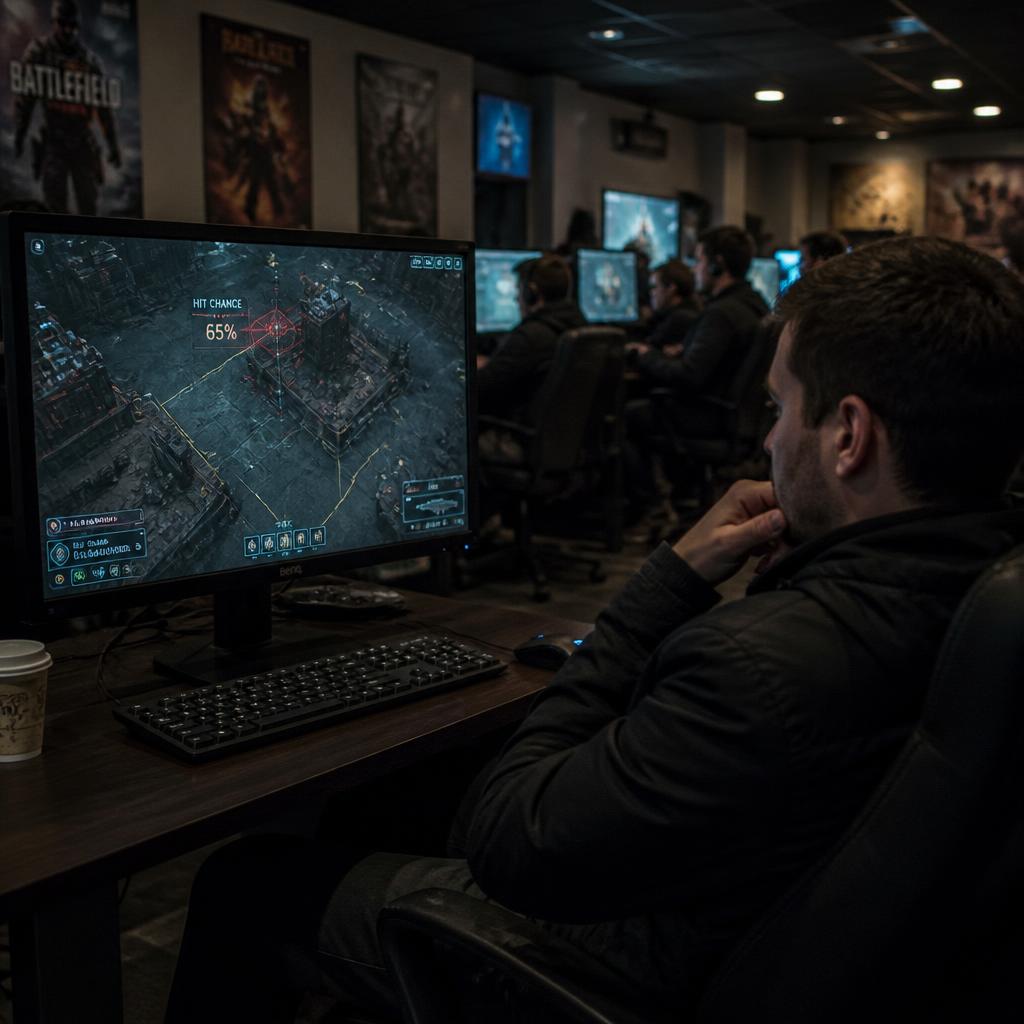
Twenty-two stations along two long benches, dimmed lighting, tidy cable runs. Drop in, pay by the hour, keep your own peripherals if you brought them.
- Seats22
- Refresh180 Hz
- BookingWalk-in or ahead
SIDE A · 1v1 Duel PC Club · SIDE B
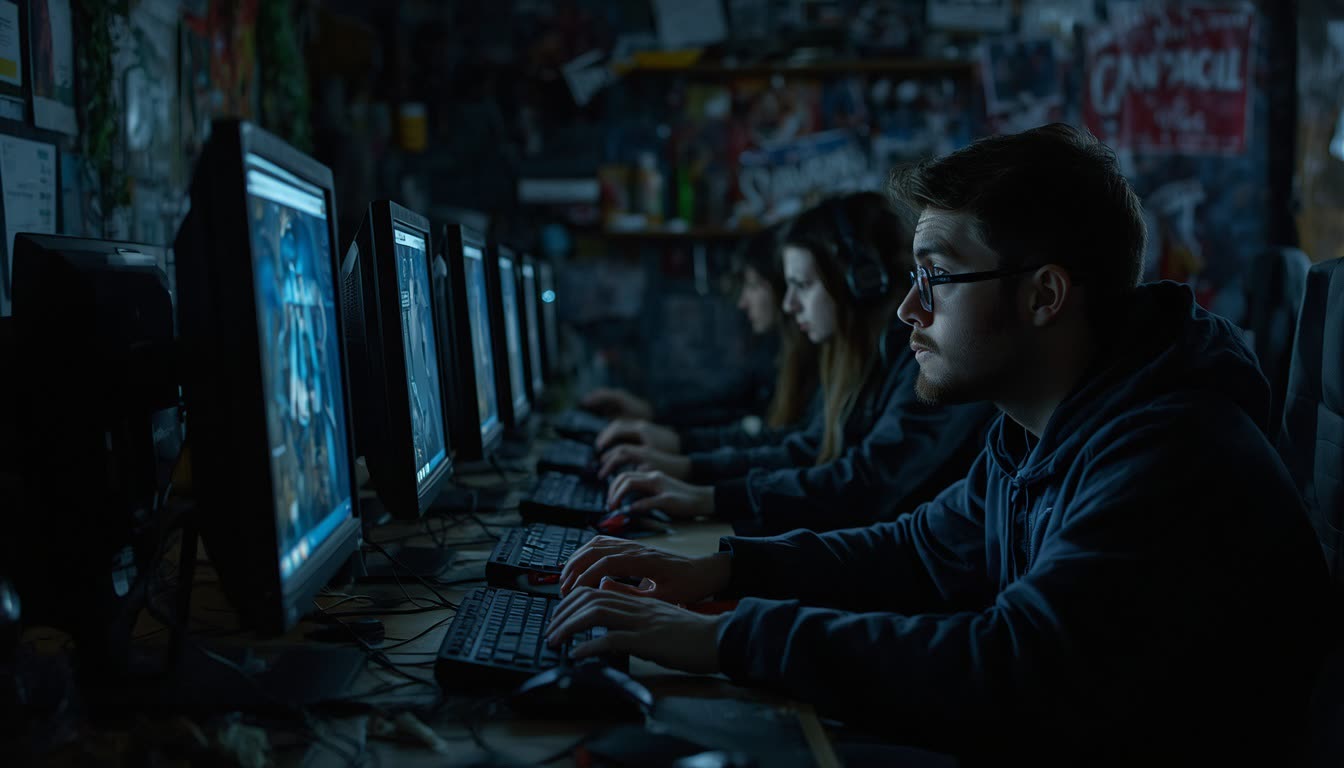
Twenty-eight stations. Three pairs built to the same screw, facing each other across a single axis — so the only difference in a duel is the two players. Move your cursor: the right half mirrors you.
Days · Hours · Minutes · Seconds until Friday duel night
Mouse draws a fading trail on the left; the right half answers in real time. On touch, the two dots walk mirrored paths.
Most of the floor is straightforward hourly gaming. The centre of the room is reserved for duels: three pairs of stations set nose to nose, each half an exact copy of the other.
What people actually play here spans the whole 1v1 canon — an evening on the main rows drifts from Tekken 8 rivalries to StarCraft II ladder grinds to someone quietly losing a chess.com blitz streak in the corner. The rows are where you sharpen a discipline; the pairs are where you prove it.
Twenty-two stations along two long benches, dimmed lighting, tidy cable runs. Drop in, pay by the hour, keep your own peripherals if you brought them.
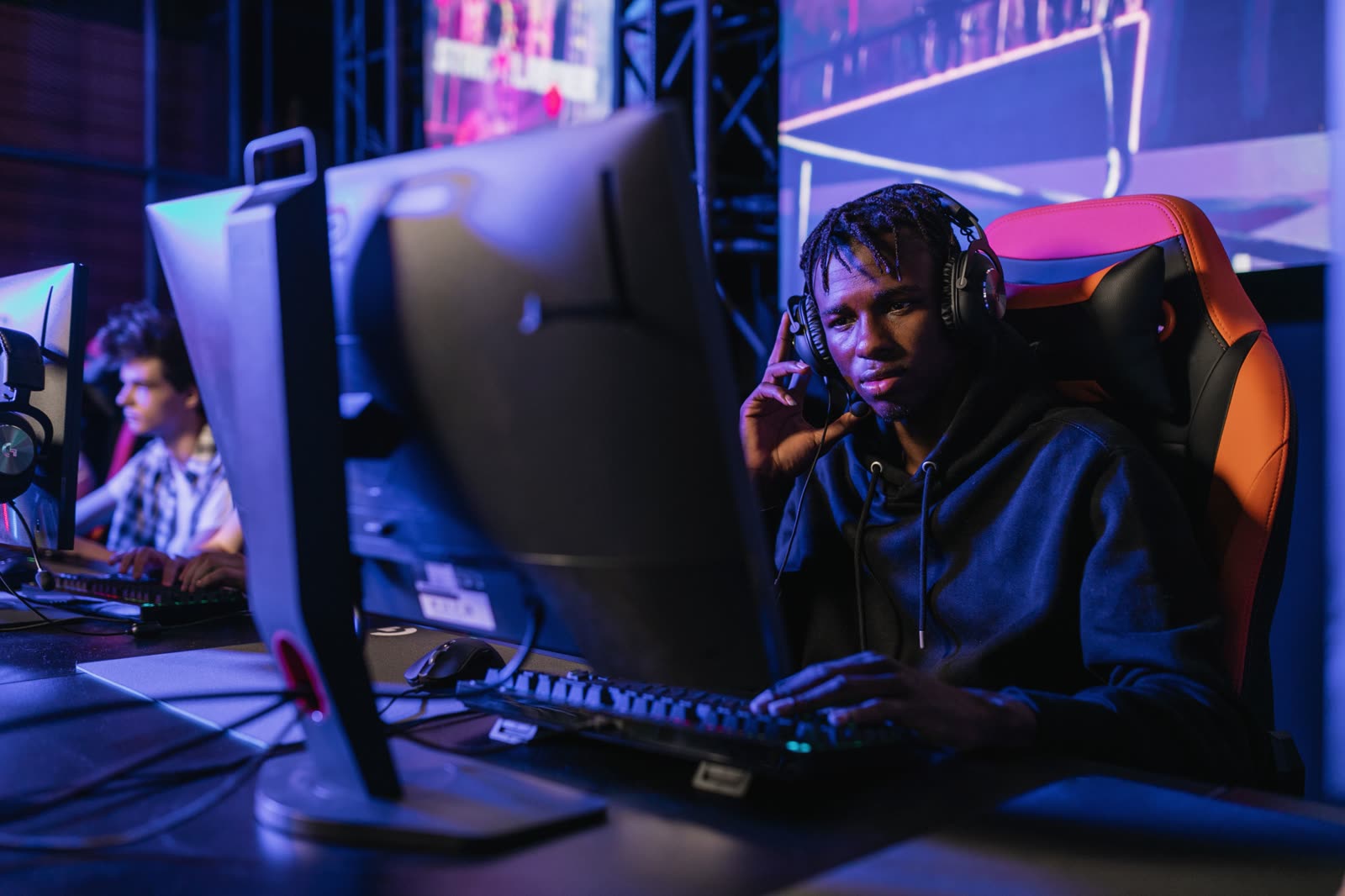
Four wide desks for two friends who want to sit side by side rather than face off — shared monitor arm, room for snacks, no clock pressure.
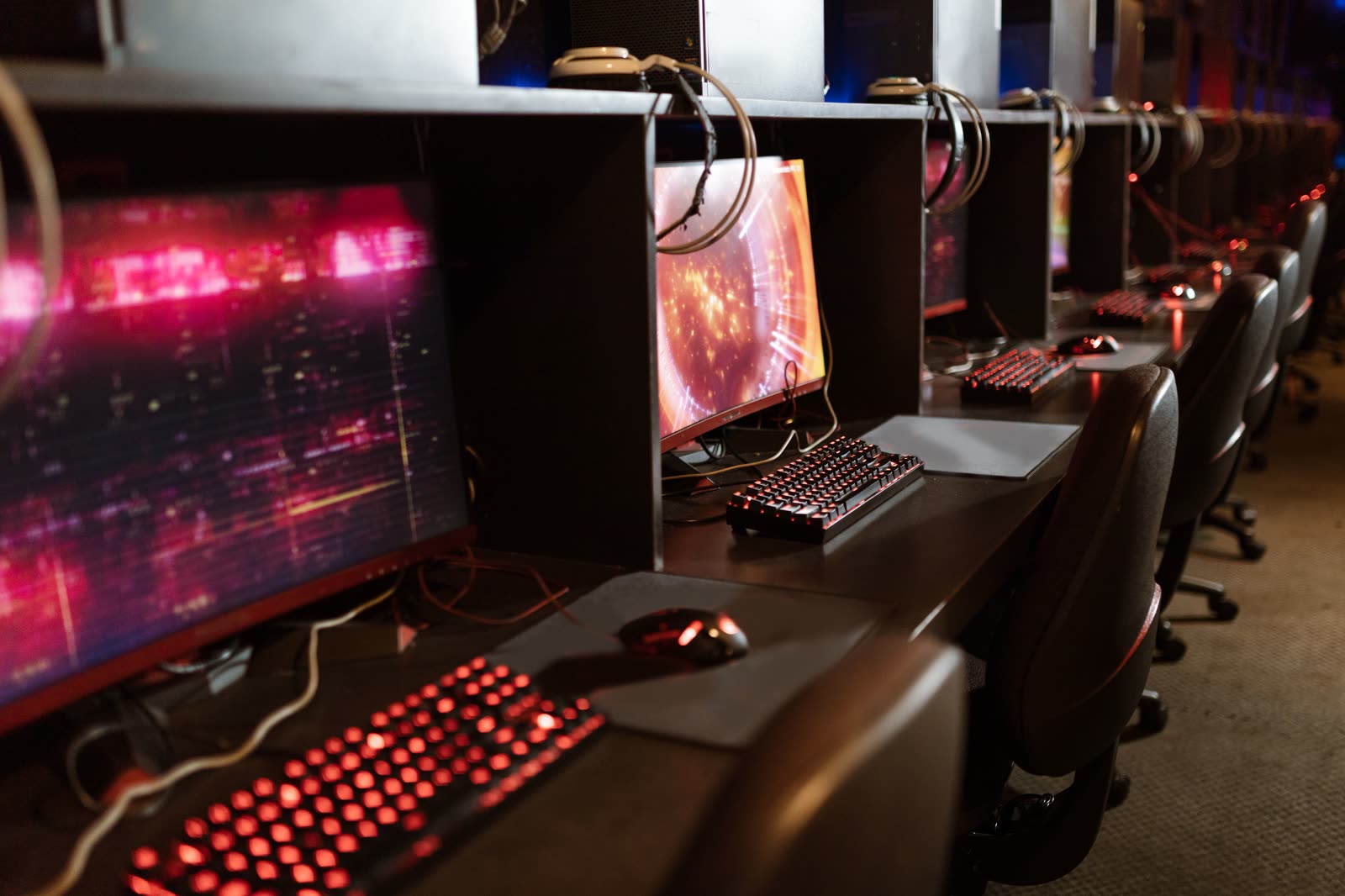
Three duel pairs — Blitz, Standard and Grand. Each pair is one spec shared by two seats: identical down to the mouse feet and the switch under every key.
In a mirror pair, sameness is not a marketing line — it is the whole product. Both seats share one build sheet: the same CPU and GPU, memory clocked to the same profile, monitors calibrated on the same afternoon to the same colour and the same 240 Hz. The mouse, the pad, the keyboard, even the wrist rest are chosen as matched sets and swapped together, never one at a time. Main-row stations run the same base platform a notch below the pairs, so practice on the floor feels like the pair you will duel on later. We log every part change against both seats of a pair at once, so drift never creeps in between them.
Sides are drawn at the table, not chosen. A coin decides who starts on the blue seat.
You switch sides at the halfway mark, so no chair, angle or draught can carry a match.
A steward resets both stations to the same clean profile before every duel begins.
Score is points and time only. Nothing rides on a match except the result on the board.
Every game on our machines earns its place the same way: two players, one result, and nothing a teammate, a lobby or a loot drop can tilt. If it can be played fairly across the axis, it belongs here.
The purest form of the duel, and the heart of Friday nights. Street Fighter 6 for footsies and drive-gauge nerve, Tekken 8 for movement and fifty-round rivalries, Mortal Kombat 1 for reads that land like verdicts, and Guilty Gear Strive for the players who want a match to feel like a fireworks argument.
Every pair carries the same leverless and stick options on both seats, so the loser can never blame the buttons.
StarCraft II ladder rules on the Standard pair: one base trade, one timing window, one player who scouted better. Age of Empires goes the other direction — forty minutes of castles, trade carts and a single decisive push — and chess.com blitz sits at the far end of the shelf for duels where the only hardware that matters is between your ears.
Slower to watch, sharper to lose. Strategy nights draw the quietest, most attentive crowd on the floor.
EA FC one-on-one is the club's most-argued-about discipline: ninety minutes compressed into twelve, every goal replayed from both seats, every penalty shout heard by the whole room. It is the easiest duel to join and the hardest to stay calm through, which is exactly why it fills the sign-up board first.
Full seasons run alongside the ladder — same coin for kick-off, same seat swap at half-time as everywhere else.
Pay for the seat and the time, that's all. A mirror pair is booked as one unit for two players and billed per hour, split however you agree.
Quietest stretch. Good for warm-ups and long single-player runs.
Peak floor. Mirror pair is 10 per hour for the two seats together.
Friday duel night runs on the plain evening hour — no surcharge to compete.
Every Friday the three pairs turn into a 1v1 ladder decided by points and the clock. Turn up, put your name down, get drawn onto a pair.
The discipline rotates week to week — Street Fighter 6 one Friday, EA FC the next, a StarCraft II or Age of Empires night when the strategy crowd outvotes everyone. The board at the door announces the game a week ahead, so you always know what to practise on the main rows before you sign in.
Names go on the board. Byes are drawn if the count is odd, never bought.
Blitz, Standard or Grand — assigned by lot, sides by coin at the table.
The gong sounds, both players swap seats and the score carries over.
Best of the set on the board wins the round. No tie stands past the second gong.
Wins add ranking points; the season resets clean every twelve weeks.
Longest set of the season on the Grand pair. Fourteen rounds, sides swapped twice, decided on the very last clock. Both players shook hands before the score was even called — the sort of ending the axis was built for.
A first-timer took the standing champion on the Blitz pair, three weeks after their first walk-in hour. Drawn onto Side B, they refused the coin re-flip and won it clean from the pink seat. New name near the top of the ladder.
Second gong drama on Standard. Level going into the switch, level coming out, settled by the fastest clean round of the night. The room went quiet, then loud — no prize on the table, just the result and the applause.
A duel club lives or dies by its library, so ours is curated rather than piled up. Every station carries the full fighting shelf — Street Fighter 6, Tekken 8, Mortal Kombat 1 and Guilty Gear Strive — alongside StarCraft II, both modern Age of Empires, EA FC and a browser pinned straight to chess.com blitz. When a balance patch lands, it lands on all twenty-eight machines the same night, because two players on different patch versions is not a duel, it is an accident.
Fighters come with training modes unlocked and frame-data overlays ready, so an hour on the main rows doubles as homework for Friday. Regulars keep personal button-mapping profiles on the house account and load them with one click on either side of any pair.
Strategy titles run with observer slots enabled — draw a crowd on the Grand pair and the match can be mirrored to a spare monitor at the end of the row. Chess boards stay set at three minutes plus two seconds unless both players agree to suffer at bullet speed.
EA FC squads are refreshed with every roster update, and duel-night matches use default kits and stadium settings so nobody wins in the menus. Casual kick-abouts on the main rows can use whatever custom chaos you like.
Want a title added to the roster? Pitch it at the desk. The bar is simple: it must be head-to-head, it must be decided by skill inside the match, and it must run identically on both seats of a pair. Clear those three and it goes on the shelf.

On a mirror pair, only if both players can use the identical model from our shelf — the point of the pair is that nothing differs across the axis. Bring a personal device and we will fit the same one to the other seat, or you both play on the pair's matched set. On the main rows there is no such rule: plug in whatever you like and enjoy the hour.
They run the same base platform a step below the pairs, tuned the same way, on 180 Hz panels. Plenty of regulars never touch a pair and never feel short-changed. The pairs exist for one thing — a 1v1 where the hardware is provably even — not because the rest of the floor is an afterthought.
Yes. Each pair sits in the open middle of the room with standing space on both flanks, and the scoreboard faces out so onlookers can follow points and the clock. We ask spectators to keep clear of the two switch clocks and to hold reactions until a round closes, out of the same courtesy the players show each other.
Every duel-night win adds ranking points; margins and clean rounds nudge the total, and the ladder resets to zero every twelve weeks. It measures skill and turnout across the season — points and time on the board, nothing more. There is no buy-in and no cash outcome, only your place on the list.
You can. Reserve a pair solo to practise both seats and feel how identical they really are, or hold it while you wait for a friend. It is billed as the two-seat hourly rate whether one chair or both are warm, since you are holding the pair off the floor either way.
Tell us who's playing and when. Sides are always drawn at the table, so pick a pair, not a colour.